Lovely Letters: A Hand-Lettered Script Font for Digital Branding
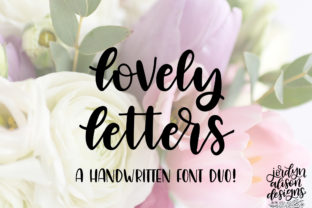
As a web designer who ships high-conversion landing pages, branded SaaS dashboards, and boutique e-commerce experiences, I reach for Lovely Letters when I need a Script Handwritten font that feels personal without sacrificing digital clarity. Lovely Letters is a brand new hand-lettered script font—it comes packed with a full set of upper and lowercase letters—and it’s engineered for intentionality: not just decoration, but deliberate visual hierarchy, emotional resonance, and brand-aligned tone in live web interfaces.
Lovely Letters for Hero Headlines and Conversion-Focused Landing Pages
When your hero section needs to whisper elegance while still commanding attention, Lovely Letters delivers nuanced contrast. Unlike overly ornate script fonts that blur on mobile or vanish against busy backgrounds, Lovely Letters maintains legibility at 48–64px on desktop and scales cleanly down to 36px on tablet—especially when paired with generous letter spacing and a crisp sans serif (like Inter or Manrope) for supporting copy. Use it for primary headlines only—not body text—and always test contrast ratios against light/dark backgrounds. On a coaching website or premium course sales page, Lovely Letters instantly signals warmth and human expertise, lifting perceived value before the first CTA button is even scrolled into view.
Lovely Letters for Boutique Online Store Banners and Product Showcase Headers
E-commerce brands—especially in lifestyle, ceramics, botanicals, or handmade goods—rely on typography to reinforce craft and care. Lovely Letters works exceptionally well as a banner headline over product photography or as a subtle accent above “New Arrivals” or “Hand-Poured Collection” sections. Because it’s a true Script Handwritten font with balanced x-height and open counters, it holds up on image overlays without competing visually. For Shopify or Webflow stores, embed Lovely Letters as a self-hosted WOFF2 file for fast loading—no third-party font service required. Just avoid using it for price tags or size selectors; reserve it for emotional context, not functional labeling.
Lovely Letters for Creative Portfolio Websites and Designer Brand Kits
Your portfolio site is your most persuasive design case study—and Lovely Letters helps tell that story before a single project loads. Apply it to your name in the navigation bar or as a stylized tagline beneath your headline (“Web Design & Brand Strategy”). Since Lovely Letters includes both uppercase and lowercase letters, you gain flexibility: use all caps for bold impact in sticky headers, or sentence case for softer, editorial rhythm in About section subheads. When building a full brand kit for client work, pair Lovely Letters with a neutral geometric sans (like Poppins or Space Grotesk) for UI labels, forms, and buttons—this pairing satisfies both aesthetic cohesion and WCAG AA readability standards.
Lovely Letters for Email Headers and Social Media Graphics in Digital Campaigns
Email clients and social platforms limit font embedding—but Lovely Letters shines when exported as crisp SVG or PNG headers for newsletters, Instagram carousels, or LinkedIn banners. Its hand-lettered authenticity builds instant rapport in crowded inboxes. Use short phrases only (“You’re Invited”, “Just Launched”, “Seasonal Edit”)—never paragraphs. And because Lovely Letters avoids extreme flourishes or tight kerning traps, it renders cleanly across Outlook, Gmail, and Apple Mail previews. For designers selling digital templates on Gumroad or Creative Market, bundling Lovely Letters as a recommended typeface adds tangible value—just ensure your license permits redistribution (most commercial Fonts do, but always verify).
Lovely Letters for Blog Headers and Editorial-Style Content Sections
A blog isn’t just content—it’s voice, pacing, and trust. Lovely Letters serves beautifully as a blog post title font when used sparingly and intentionally. Try it for featured posts, series headers (“Behind the Brand”), or quote callouts—but never for article body text. Its organic flow supports storytelling without distracting from readability. On WordPress or Ghost sites, load Lovely Letters via @font-face with fallbacks, and always define font-display: swap to prevent invisible text during load. For dark-mode readers, test its performance on charcoal or deep navy backgrounds: its medium stroke weight and open apertures hold up better than ultra-thin scripts.
Lovely Letters for App Onboarding Screens and Micro-Interactions
In mobile-first UI design, every pixel carries weight—and Lovely Letters adds expressive nuance to onboarding flows where personality matters. Think: “Welcome back, Maya” on a wellness app splash screen, or “Let’s begin your journey” on a habit tracker. Because it’s a fully equipped Script Handwritten font with complete character sets, you won’t hit missing glyphs mid-flow. But keep usage minimal: one line per screen, max. Avoid buttons or input fields—reserve Lovely Letters for moments where human tone directly influences retention and perceived empathy.
Lovely Letters for Responsive Navigation Logos and Branded Web Components
Many designers overlook how much brand recognition lives in the nav bar. Lovely Letters makes an elegant, scalable logo treatment when used for wordmarks—especially for creative studios, wedding planners, or artisanal brands. Export it as SVG for crisp rendering at any size, and test legibility at 24px on mobile menus. If your site uses a dark header, apply a subtle white stroke or drop shadow to ensure contrast. Remember: Lovely Letters is a display font, not a system font—so always pair it with a highly legible, variable-weight sans for menu items, dropdowns, and footer links.
Lovely Letters Licensing for Client Projects and Commercial Web Fonts
Every Fonts purchase should include clear commercial licensing—and Lovely Letters covers standard web use, client deliverables, SaaS interfaces, online stores, and digital ad assets. That means you can safely use it in Figma prototypes, Webflow client sites, Notion brand hubs, and downloadable Canva templates—as long as end users aren’t redistributing the font files themselves. No subscription. No monthly fee. Just a one-time license that supports ethical, professional typography across your entire workflow.